

So, you’ve just been handed the fundraising paver project.
Perhaps you're on the school P&C, part of a sporting club or community group, helping your church raise money, or you simply put your hand up at the wrong moment and suddenly everyone is looking at you.
Where do you even start?
The good news is that you don't need to be a fundraising expert.
At Talking Stones, we've been engraving personalised products and working with organisations on fundraising and commemorative projects for more than 20 years. We've learned a lot about what makes these projects work, and importantly, what can make them unnecessarily difficult.
So before you start choosing pavers, collecting names or deciding what you're going to charge, start with three simple questions:
What are we raising money for?
How much do we need to raise?
When do we need to raise it by?
Once you know those three things, you've got the foundations of your fundraising campaign.
1. Start with what you're raising money for
People need a reason to support you.
"We're raising money for our school" isn't nearly as compelling as:
"We're raising $25,000 towards new playground equipment for our students."
Your project might be a new playground, sporting equipment, a library, improvements to your clubhouse, restoration of a church, a memorial garden or something completely different.
Whatever it is, make it clear.
Fundraising pavers work particularly well because supporters aren't simply making a donation. They're helping achieve something while also becoming a permanent part of it.
A child's name might remain in a school courtyard long after they've graduated. A family's name might become part of a church garden. A former club member might be recognised in a pathway decades after they played there.
That's part of what makes this type of fundraising special.
2. Work out how much you actually need to raise
Once you know what you're fundraising for, put a dollar figure against it.
Let's say you need $20,000.
It's tempting to divide $20,000 by the number of pavers you think you can sell and stop there.
But remember:
The selling price of your paver isn't the amount your organisation raises.
You need to allow for the cost of engraving, freight and installation.
As an initial budgeting guide, we suggest allowing approximately $20 to $25 per standard paver for engraving.
Freight will vary according to quantity and destination, but as a rough planning allowance you might budget around $1 to $2 per paver for many metropolitan areas, and around $3 to $4 per paver for regional and country areas.
These are planning figures rather than quotes. Talk to us about your particular project before setting your final prices.
You'll also need to allow for installation. We recommend having the pavers professionally installed, so obtain an installation quote early rather than discovering that cost at the end of your campaign.
3. How much should you charge for a fundraising paver?
Here's something we've learned from many years of working on fundraising projects:
Don't underestimate what people are prepared to contribute to something they care about.
You don't necessarily need to offer everyone the same $50 paver.
In fact, we'd encourage you to consider several levels of support.
Individual Paver – around $75
This could be your entry level.
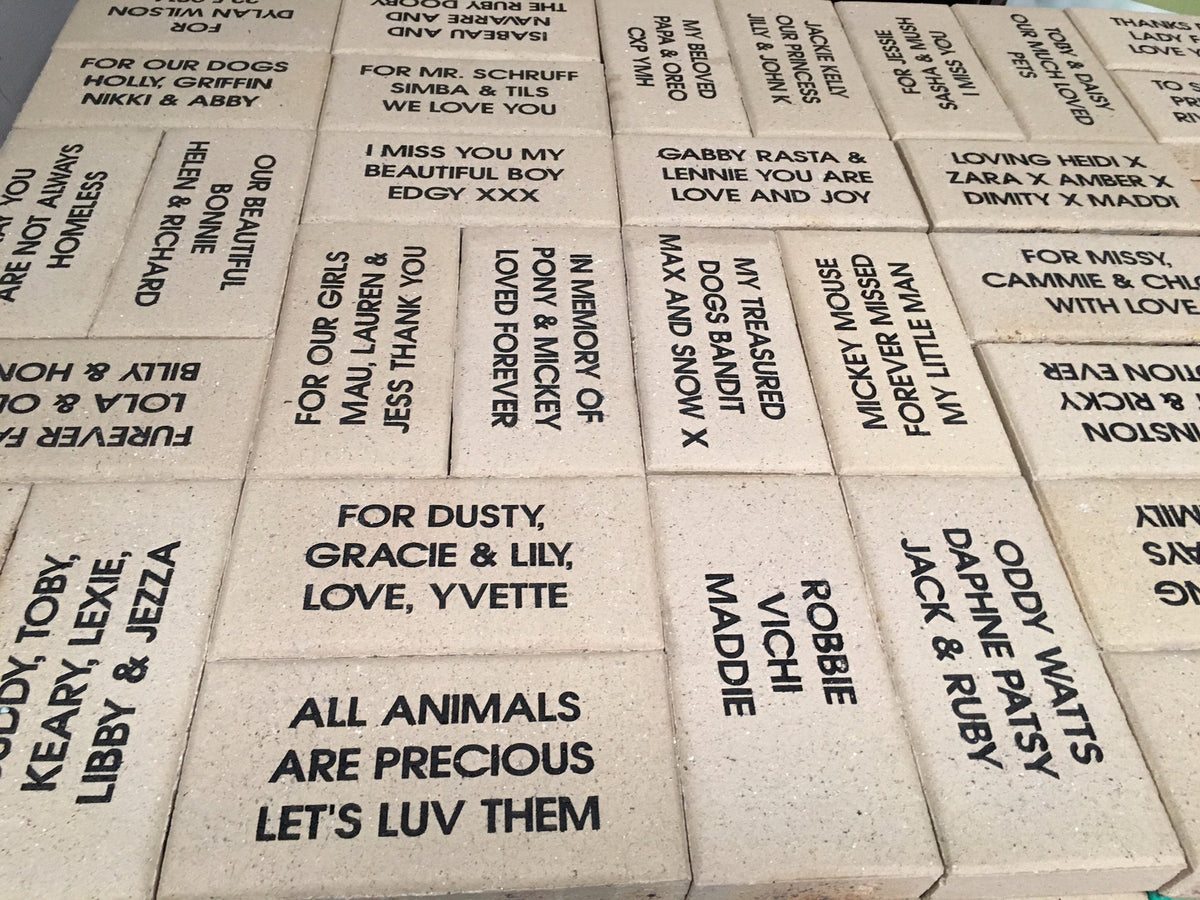
One engraved paver featuring a person's name, family name, child's name, year or short message.
Family or Supporter Package – around $150
Two pavers give families or supporters an opportunity to contribute more and provide additional room for names or messages.
Business or Major Sponsor – $300 to $500 or more
This could incorporate multiple pavers, perhaps arranged together, with a business name, logo or more detailed artwork.
And don't assume $500 needs to be the maximum.
If a business, former student, family or major supporter wants to make a substantial contribution to your project, give them that opportunity.
The important thing is not to decide for your donors what they can afford.
Give people choices.
4. Don't just sell to the obvious people
For a school fundraiser, the obvious market is current parents.
Start there, but don't finish there.
Think about everyone who has a connection to your organisation.
That could include:
current families, grandparents, former students, past teachers, staff, former members, suppliers, local businesses, community organisations and larger companies with connections to your area or organisation.
A business might happily contribute several hundred dollars for recognition within a permanent community project.
A former student may love having their family name included at the school they attended 30 years ago.
A grandparent may buy one for each grandchild.
Instead of asking:
"Who will buy a paver?"
ask:
"Who has a connection with what we're creating?"
That's a very different question.
5. Give people a reason to act now
Every fundraising campaign needs a deadline.
Without one, it's incredibly easy for people to think:
"I'll order mine later."
And later never comes.
Give your campaign a clear opening and closing date.
For example:
Orders Open: 1 March
Orders Close: 30 April
Installation: June
Now people know exactly what they need to do and when.
It also allows you to build your promotion around milestones.
"Four weeks remaining."
"100 pavers sold."
"We've reached 50% of our fundraising target."
"Final week to become part of our commemorative walkway."
A deadline creates momentum.
6. Make ordering as easy as possible
This is where fundraising can become a nightmare for poor Julie from the P&C.
You've sold 200 pavers.
Wonderful.
Unfortunately, Julie now has 200 order forms, payments, names, spelling variations and engraving instructions sitting on her dining room table.
It doesn't have to work that way.
Talking Stones can assist with the ecommerce side of your fundraising campaign, including creating a dedicated online landing page where supporters can learn about the project, select their option, enter their engraving information and pay online.
We can collect the online payments and provide clear reporting throughout the campaign.
At the completion of the project, the funds can be reconciled with the pavers ordered through the campaign and your organisation paid its proceeds.
That takes a considerable amount of administration away from your volunteers.
7. Can we still sell pavers ourselves?
Absolutely.
You might want to take orders at a school fête, reunion, open day, church service, sporting event or club function.
In-person selling and online ordering can work together.
You might even display a finished engraved paver at your event so people can see exactly what they're buying.
If your organisation collects some orders and payments directly, those can be incorporated into the overall project and reconciled with the online campaign.
The important thing is having a system established before you start taking orders.
8. What can we put on a fundraising paver?
Names are only the beginning.
Depending on the material, size and design, engraving can include:
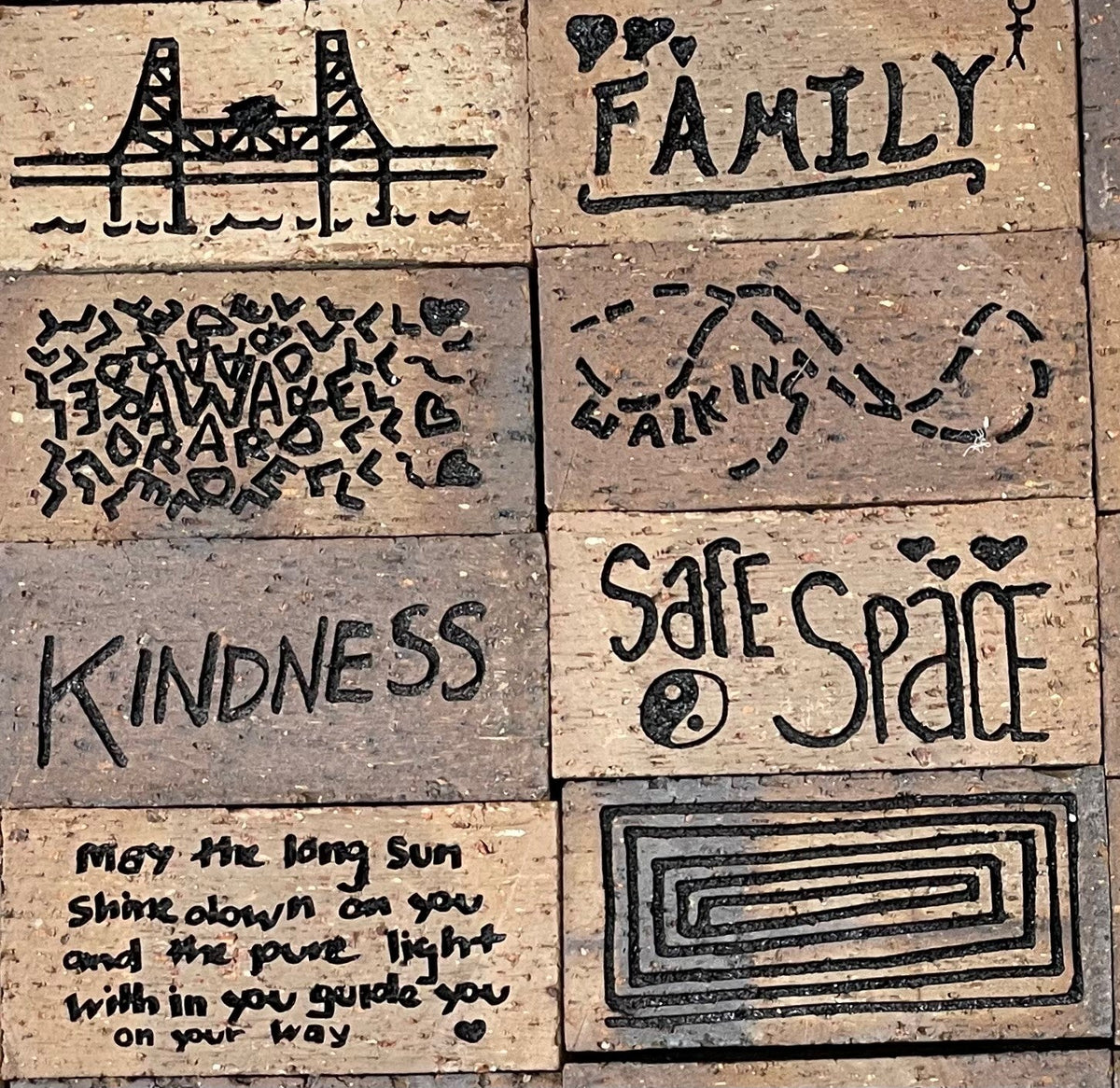
individual names, family names, dates, short messages, business names, logos, club emblems, simple artwork and even children's drawings.
More intricate designs and logos can require additional engraving work, so allow a little more in your budget for these.
They can also become part of your premium sponsorship packages.
For example, a standard donor might receive a text-only paver while a major business sponsor could have a larger grouping incorporating its logo.
Talk to us about your ideas. We've been doing this for a long time and can help determine what will work.
9. Do we have to use Talking Stones' pavers?
No.
If you already have a particular paver in mind, talk to us about it.
In many cases we can engrave pavers supplied by you, although we'll need to establish that the particular material and finish are suitable for engraving and work out how they'll get to and from our facility.
Alternatively, we can supply the pavers.
Our commonly used fundraising pavers are approximately 230 mm x 115 mm and are available in a red/brown or lighter cream/brown colour.
For a large project, consistency in paver size can also make designing and installing your finished area much easier.
10. Plan where the pavers are going before selling them
This is an easy step to overlook.
Before launching your campaign, decide where the finished pavers will live.
Will they form a pathway?
A courtyard?
A feature around a garden?
An entrance?
A commemorative area?
Speak with a professional paving contractor and work out approximately how many pavers the space can accommodate, what installation will cost and whether the area could be expanded later.
That last point is worth thinking about.
Your first campaign doesn't necessarily have to be your last.
If you design the area appropriately, you may be able to run another fundraising round next year and add more pavers.
Once people see the first finished installation, you may find that those who missed out suddenly want to be part of the next one.
11. Think beyond fundraising pavers and bricks
Sometimes the best fundraising idea isn't a brick at all.
Talking Stones works with a wide range of natural and personalised products, which means we can help organisations think a little differently.
Depending on the project, that might include engraved river stones, sandstone keepsakes, commemorative pieces, plaques or other personalised products.
One project we're particularly proud of involved the Queensland Police Dog Squad.
For its 50th anniversary in 2024, the squad wanted to commemorate every police dog that had served throughout its history.
Talking Stones supplied and engraved individual river stones for the dogs. Each stone featured PD, the dog's name and their years of service.
The stones were placed together in a commemorative garden at the Queensland Police Dog Squad premises, creating a permanent record of the dogs that had served.
The project was also designed to continue. As future police dogs complete their service, further stones can be engraved and added to the garden.
Handlers were also given the opportunity to purchase an additional stone to keep themselves.
The garden was officially unveiled as part of the squad's 50th anniversary celebrations.
It's a good example of why we encourage organisations to talk to us about what they're trying to achieve, rather than simply asking us for a price on a particular product.
Sometimes there's a better idea.
12. Tell people how the fundraiser is progressing
Don't launch the campaign and then disappear.
Keep talking about it.
If your target is $20,000 and you've reached $8,000, celebrate it.
If you've sold your 100th paver, tell people.
Show examples of finished pavers.
Thank participating businesses.
Remind people of the closing date.
And most importantly, keep reminding everyone what the money is going towards.
You're not really selling bricks.
You're selling the new playground, memorial garden, clubhouse improvement or community project that those bricks are helping make possible.
Your fundraising paver checklist
Before you launch, make sure you've thought about:
- What are we raising money for?
- How much do we need to raise?
- When do we need the money?
- Where will the finished pavers be installed?
- How much will installation cost?
- Who are our potential donors?
- What levels of sponsorship will we offer?
- What will we charge at each level?
- What will each donor receive?
- How will people order and pay?
- How will we promote the campaign?
- When will orders close?
- Could the project continue with additional pavers in future?
And if you can't answer all of those yet, that's okay.
That's where we come in.
You Don't Have to Do It Alone
If you've just been handed the fundraising paver project and aren't sure where to begin, talk to us before you've worked everything out.
You don't need to arrive with a finished plan.
Tell us three things:
What are you raising money for?
How much would you like to raise?
When would you like to achieve it?
From there, Talking Stones can help you think through the pavers or products, donor levels, engraving, designs, ecommerce, campaign structure and logistics.
We've been doing this for more than 20 years.
So while this might be your first fundraising paver project, it isn't ours.
Ready to get started?
Start Your Fundraiser

Share:
Raise Money for Your School, Club or Organisation